Showing posts with label Gear Review. Show all posts

Tuesday, March 24, 2020

Simply Stuff - Gear Regrets!

One of the fun parts about backpacking is getting to experiment with different types of gear and figure out what works for you. I, Connor, am a bit of a gear geek. Roslyn also appreciates trying out new gear and an optimized load out but doesn't like doing all the research.

If you're trying out different equipment, there's always a period where the new gear is the best gear. After the honeymoon period wears off you start to notice stuff that could be better, or that you miss about your old gear. Eventually, you'll know if the equipment is right for you or not. Unfortunately, a fair amount of gear ends up falling into the 'not for us' category or at least into the 'I'd like to keep looking' category.

Roslyn and I thought about all the gear we've used over the last two years and came up with two pieces of gear we wish we hadn't bought. Both of them are water filters, which made for a couple annoying trips.

1 - MSR Miniworks Water Filter


The MSR Miniworks was the first water filter we used. It has a decent flow rate and a reusable ceramic filter that can be cleaned to provide a long term water filtration solution. From our experience, moderately dirty water caused the ceramic filter to foul after only 4-5 litres of water, and maintaining suction was difficult as the pump would start to cavitate if any air bubbles entered it from the hose. We used this water filter for only one trip before replacing it, and brought it as a back up on one other trip but never used it.

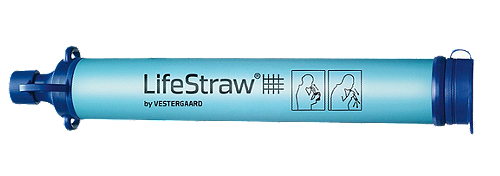
2 - Lifestraw
We bought the Lifestraw as a back up filtration system in case our primary filter broke. We've luckily never has to use it, but after the first summer we also stopped carrying it with us. For less weight and a smaller package, you can get water filtration tables to make water drinkable for you. The tablets will also fit in your first aid or odd's and end's containers instead of having to be another piece of gear to keep track of.

We wish we hadn't purchased the above gear, but having said that other people might like to use them. In the conditions they are meant for, both the MSR Miniworks and the Lifestraw work properly, we just found both of them limiting out backpacking experience.

Images obtained as screenshots from:

Tuesday, January 21, 2020

Two Person vs Three Person Tents

There's lots of discussion around the "Big Three" pieces of hiking equipment (tent, sleeping gear, backpack), but rarely have Roslyn or I found anything on the differences in what the size of a tent means when two people are using it. Having used a three person tent for all of the summer of 2018, and a two person tent for all our backpacking in 2019, here's some discussion on the differences.

Ease of Use

Three person tents are easier to use. Setting up two person or three person tents is about the same once you've practiced with your tent, but sleeping setup and gear storage is much easier in a three person tent that in a two person tent when you have two people sleeping in it. With the three person tent, there's enough room for two people and all their gear to sit inside the tent with some space left over, and you don't need to worry about organizing your stuff very much. With a two person tent, the entire floor space will likely be taken up with the sleeping pads being used with a bit of space left at either the foot or head of the bed.

What this means in practice is that in a two person tent you will need to be comfortable with the person you are sharing the tent with. Any slope in the camping area will mean the two of you are sliding together during the night and getting pretty close. You will also need to either sleep with your feet on top of your backpack or keep your back pack in the vestibule, along with quite a bit of other gear you would normally keep inside if there was room.

Roslyn and my setup with our two person tent has each of us put our backpack, shoes, one water bottle, trekking poles, wet clothes, bear spray (my side only), sit pads, and some other small items in our tent vestibules. In the tent we only have our sleeping pads, sleeping bags, clothing and other items in our dry bag, and electronics. We also hang some damp clothing inside the two person tent hoping it will dry off. If we have the three person tent everything except shoes goes in the tent.

Keeping organized with a two person tent will help a lot. Roslyn and I have laid out exactly where everything goes and make sure to always put our gear in the same spot. This also helps with packing up the tent in the morning and gets us out on the trail faster.

Weight and Packability

Two person tents weigh less and pack better. Our two person tent weighs about 3.5 lbs, while our three person tent weights about 7 lbs. The two person tent takes up less than half the space that our three person tent does in a backpack. The smaller size means we can do 4 day trips with our 30 litre backpacks instead of needing our larger 55/65 litre packs. The smaller size also lets us split the weight more evenly because we can divide up the food/fuel/cooking gear better instead of the tent taking up the space.

Setup Location

Two person tents are easier to find spots to setup. This is due to the smaller foot print that a two person tent has compared to a three person then. On well maintained trails with designated camping spots this may not be a big deal. On more rugged trails, places that get very busy with limited scramble sites, or in densely treed areas, having a smaller foot print has helped us get more tents in or get our tent into a nicer spot our three person tent would not fit.

Overall Comfort

Three person tents are more comfortable overall. The extra foot print size and head room in a three person tent makes stretching out, getting dressed, packing and unpacking much easier and less cramped. Being able to spread out a bit more while sleeping also makes the night much more comfortable.

Given the above four points, Roslyn and I have decided to have both a three person tent and a two person tent. When weight isn't a factor on canoe trips or car camping trips we opt to take the three person tent since the major downsides of weight and packability are moot. For backpacking trips we take our two person tent because we would rather cut out some weight and make the trail easier for ourselves at the expense of comfort at camp. Everyone has a different set of priorities though, so I hope that the above will help you come to a decision on what size of tent to choose.

Thursday, February 21, 2019

Gear Review - Trekking Poles

So the next piece of gear I want to review is the Cascade Mountain Tech Carbon Fiber Cork Trekking Pole. I bought these trekking poles near the start of the season in 2018, around April, and used them for the entire summer. It took me until the end of April to buy the trekking poles because I was pretty skeptical that they would actually help. However, Roslyn bought a set and I tried them out, finding I quite liked them.

Usability

I found these trekking poles pretty versatile. They have quick-lock clamps for sizing, which makes it fairly painless to lengthen or shorten them when ever you need to. There is also a long choke handle below the cork handle that makes it comfortable to quickly shorten you grip by about 6 inches. I found this very helpful on the up hills because I could just shift my hand position down without removing them from the wrist straps and they remained comfortable and effective.

Durability

These trekking poles have been used is the snow, rain, and heat, for both cruising over flat terrain and for helping with rocky climbs. I've leaned on them both with the direction of the shaft and side on, and they never creak or seem like they are going to break. I've also gotten them stuck in cracks between rocks and yanked on them pretty hard by accident and they survived. The tungsten carbide tip is still in create shape as well, even though I've been slamming it into bedrock all summer. I would say that these are very durable and will last you for a long time as long as they're used for their intended purpose.

The only part of the trekking pole that I think might wear out is the cork handle. It shrinks a bit as it dries out, especially in high heat environments, and your hands will slowly chafe away at the cork material causing it to fall off. There is an option for an EVA grip which would last longer, but I went with the more comfortable option.

Comfort

The cork gripped handle is amazing. After using it for a few weeks it completely conformed to my hand, kept them from getting too sweaty, and stayed tight in my grasp the entire time. The extra handle is made out of EVA foam, which is comfortable as well, but I prefer the cork as the main handle material.

While in use, the poles also generate very little vibration that your hand feels. This helps reduce fatigue in your hands and forearms, making extended use more comfortable and less taxing.

The quick-locks also provide a lot of comfort in my eyes. They easily snap in and out of the tight position, and are much nicer to use than the twist-locks.

Conclusion

If you are looking for a light weight, sturdy, comfortable trekking pole then these will work perfectly. There are aluminum options as well which are a bit heavier but less expensive, and a more durable 3K version of the carbon fiber pole which is more expensive. I think the regular carbon fiber is a nice balance between all the options.

Tuesday, February 5, 2019

Gear Review - Salomon Quest 4D 3 GTX Hiking Boots

Last summer I used the Salomon Quest 4D 3 GTX Hiking Boots. I bought them early in the year and broke them in when the snow was still on the ground before wearing them all summer. So far, the boots have seen snow, rain, high and low temperatures, and 400+ km of use. They are an all around sturdy boot that I would recommend to anyone wanting a heavier backpacking boot. Here's a more in depth review.

The Break In Period

The break in period with these boots was quick and painless. I started wearing them and was worried they would be stiff at first, but after about 5 km of walking in them they started to conform to my foot and by the end of 10 km they were happily broken in. Since then they haven't changed much and are holding up well.

Support and Protection

These boots have kept my feet in one piece through some rocky and hill trails in the Canadian Shield. When laced properly they provide excellent support for both the arch of your foot and your ankle, and have helped prevent numerous rolled ankles. They are also rugged enough that I haven't hurt my feet yet by accidentally kicking a rock or step while doing a climb.

Temperature Control

Like all waterproof foot wear, these boots run a little warm. I was concerned about how they would perform heat control wise last July when we were hiking in temperatures of 30 degrees celcius, but they were still relatively comfortable and I wasn't really suffering from warm feet more than I expected. I also found that there were no hot spots in the boots where they were causing and sores to appear on my feet or heat rashes, so all in all I'd say they did quite well.

I have also been using these boots as my winter foot wear for the last few months in Winnipeg, Canada. With a decently warm sock they are good at keeping my feet warm down to about -20 degrees celcius. Any colder than that and my feet tend to start getting colder after about 25 to 30 minutes. They've been serving me pretty well during the polar vortex were experiencing (temperatures of -40 degrees celcius before the wind chill) as my commuting foot wear.

Water Proofing

The water proofing on these boots works very well. I've used them to walk through low streams and pools of water, stood in pools of water with them for 5 to 10 minutes, walked through dew soaked grass and bushes, and taken them out in a down pour. In all cases, the only time the boots were wet was because of operator error (I forgot to wear water proof pants once in a rain storm).

With that being said, the boots take forever to dry out if they do get wet. On a good day your looking at 4 to 5 hours to get them to dry out if its warm and you can get a good breeze blowing in to them. If its cooler, say around 15 degrees celcius, and there's either no breeze or its humid out, your looking at 10+ hours to get them to dry. When these boots were soaked on our hike of the Pisew-Kwasitchewan Falls trail I had them off and tried to dry them out for about 15 hours but the humidity and temperature meant they were still soaked the next morning. This is a pretty common problem with water proof boots that I new about before hand, but it still sucks to put wet boots on.

General Wear and Tear

These boots have been used pretty well and so far are holding up very well. All the eyelets are still in good condition, the arch support is functioning properly, the tongue is in good shape, the treads aren't deteriorating too quickly, and the laces are working well. Not much else to say here except that they are pretty sturdy.

Conclusion

I would recommend these to boots to people that are expecting to be putting in some miles in rugged terrain or with a moderate or greater amount of weight. For day hiking these boots are probably a bit more than you need, but on multi-day hikes like the Mantario trail with lots of elevation changes you would benefit from using these.